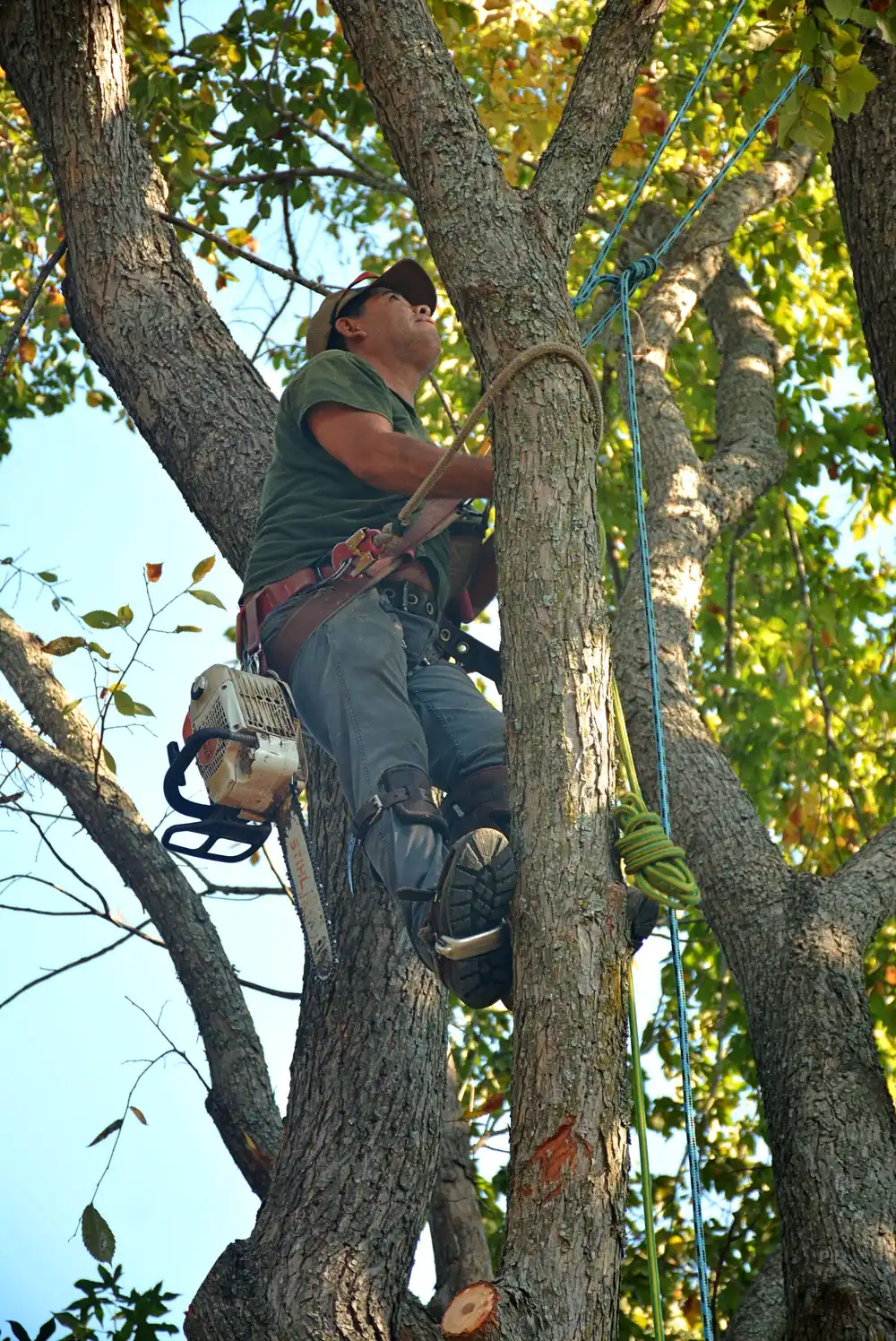
Tree Trimming Spokane — when and how trees in the Spokane area get pruned. Fill the form and we pass your request to a local Spokane-area tree pro.
Takes 20 seconds. We pass your request to a local Spokane-area tree pro.
Tree Trimming Spokane — this page covers when and how trees in the Spokane area get pruned, the species-specific windows, and what drives the quote. For an estimate on your specific tree(s), fill the form below — we pass your request to a local Spokane-area tree pro.
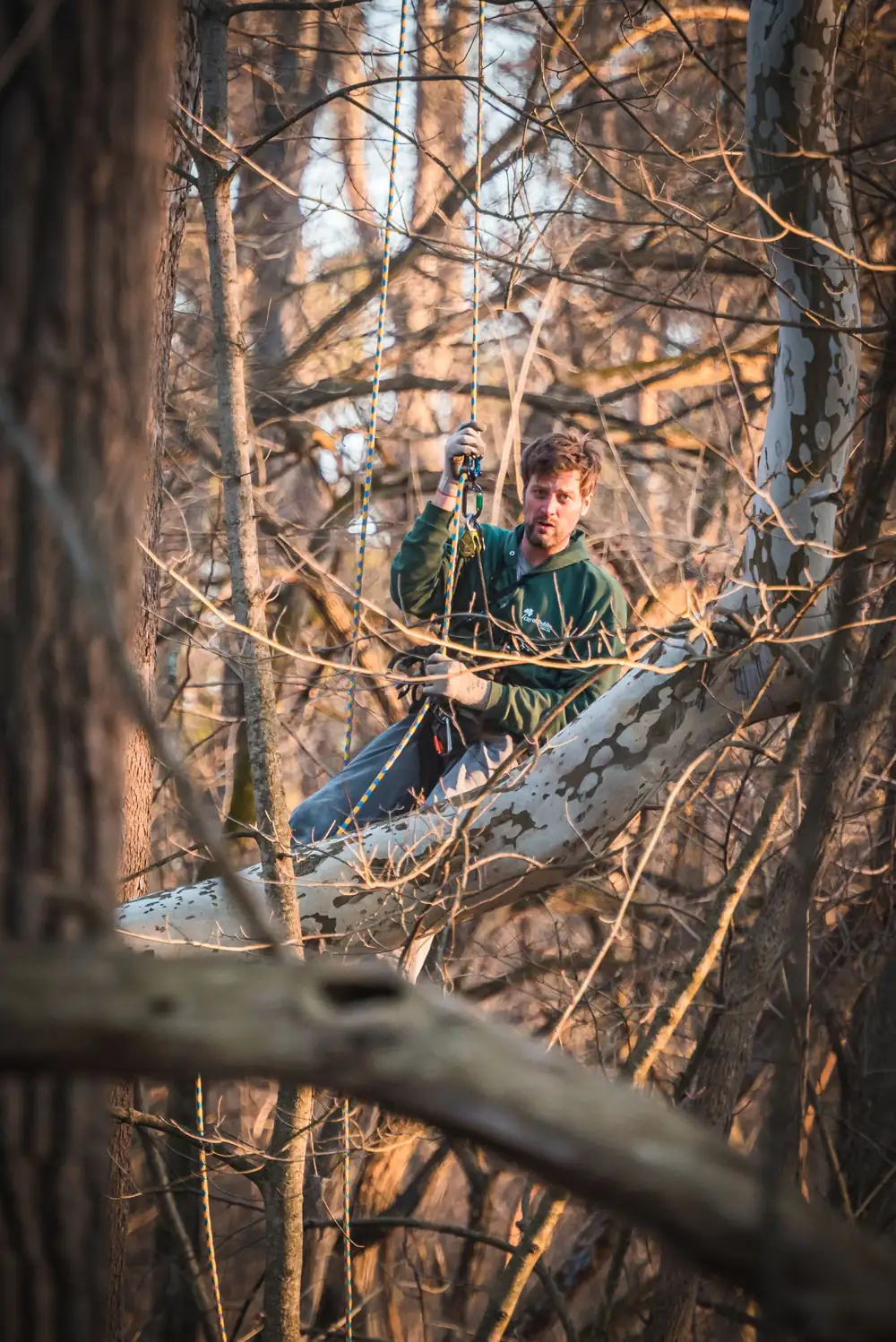
Spokane's seasons set the trimming calendar more than most places. Three windows matter:
Late winter / early spring (February–March). The dormant window for most deciduous species. Pruning cuts heal fast once bud-break starts. Fruit tree pruning (apple, cherry, pear) in Spokane yards is almost always done in this window.
Spring deadwood pass (April–May). Right after the snow finally releases, the pros do a lot of deadwood removal on ponderosa pine, Douglas fir, and overgrown deciduous. Spokane averages 45.4 inches of annual snowfall (NOAA 1991–2020 normals: NWS Spokane — Climate Normals), and the wet April–May snow is responsible for most of the limb failures the pros see. A deadwood pass is often the single highest-value preventive trim of the year.
Summer (June–August). Light pruning only — minor cleanup, hazard removal, no major structural work. Fresh cuts in hot dry Spokane summers can stress trees that are already drought-stressed, and some species (maple, birch) bleed sap heavily.
Fall (September–October). Pre-winter cleanup. Removing deadwood and long horizontal limbs before snow season reduces the chance of snow-load failure. Also the right window for structural pruning on young trees before dormancy.
Ponderosa pine (Pinus ponderosa). The signature Spokane conifer (USDA Forest Service — Silvics of Ponderosa Pine). Mature ponderosas rarely need "shaping" — their natural form is the correct form. Pruning on ponderosa is mostly: dead branch removal, lower branch limbing-up for clearance, and crown reduction near structures. Avoid topping — it creates weak epicormic re-growth that fails in the next windstorm.
Douglas fir. Similar to ponderosa — mostly deadwood and clearance pruning. Densely-stocked Douglas fir can have interior deadwood that needs annual cleanup.
Spruce (blue spruce, Engelmann spruce). Lower branches of mature spruce tend to die and need removal for appearance. Avoid heavy canopy work on mature spruce — the species doesn't recover canopy density well.
Deciduous — maple, elm, ash, birch, locust. Structural pruning in the dormant window. Crown thinning (not topping) to reduce wind load. Removal of co-dominant leaders before they get large.
Fruit trees — apple, cherry, pear. Dormant pruning for form and fruit production. Spokane has a long backyard-orchard tradition, especially in the South Hill and North Spokane neighborhoods.
Cottonwood and poplar. Fast-growing, weak-wooded, prone to limb failure. More deadwood work than for any other common Spokane species.
Three different operations, not interchangeable:
Crown reduction — selective cuts back to lateral branches that are at least 1/3 the diameter of the cut branch. The tree keeps its shape, just smaller. Correct technique for storm-prep work on mature conifers.
Shaping — selective tip pruning for appearance on ornamentals. Common on landscape maples, Japanese maples, dwarf conifers.
Topping — cutting the main stems horizontally at an arbitrary height. The modern consensus across professional arboriculture: topping is bad practice. Epicormic re-growth is weakly attached, grows fast, and fails in subsequent windstorms. Spokane pros will usually decline topping requests and offer crown reduction instead.
Rules vary by whether the tree is on your private property or in the public right-of-way. The City of Spokane Urban Forestry program maintains the current permit rules — see City of Spokane — Tree Permits. For street trees (between curb and sidewalk) in Spokane, the city often has a say in pruning scope — especially for species that are part of a street-tree inventory. The pro flags this during the walk-through and will refer you to the city before any cuts if needed.
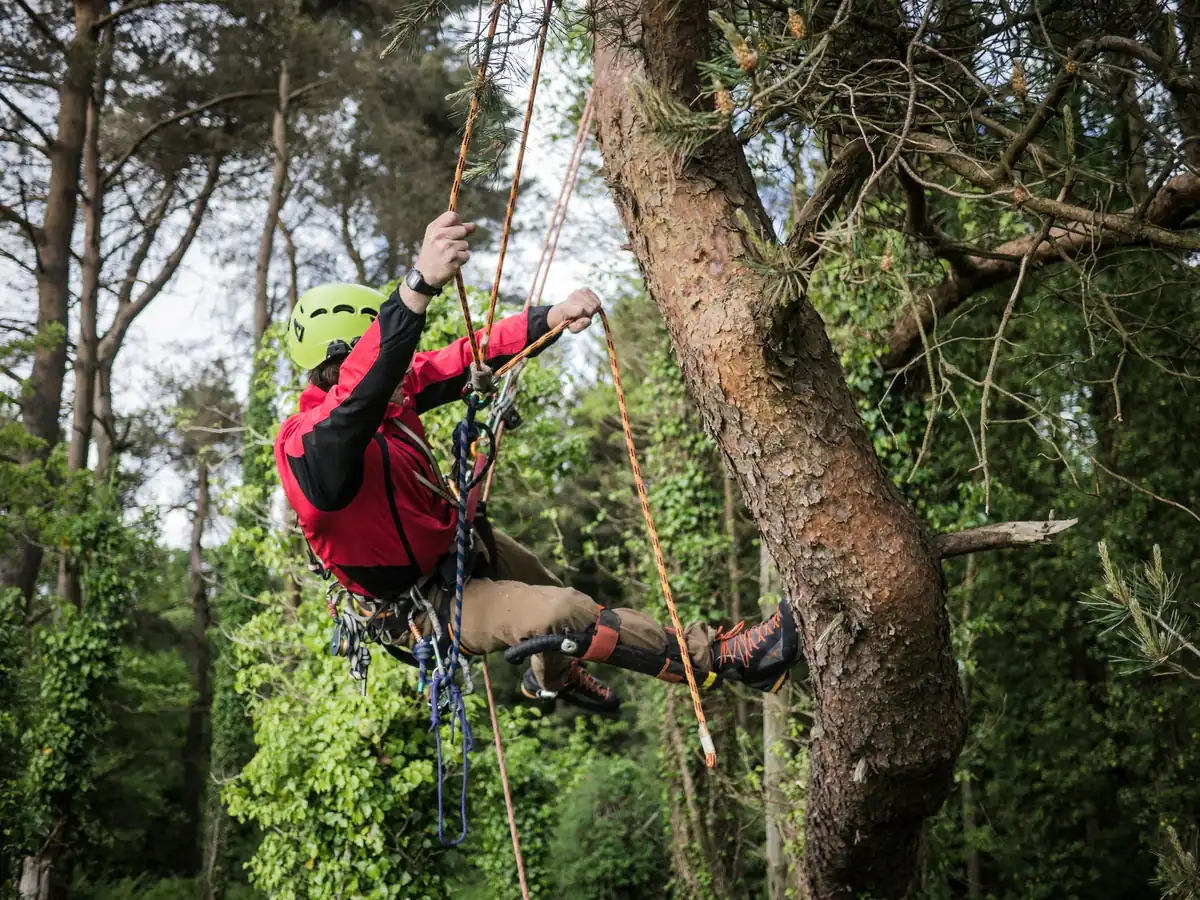
Most of the pruning-induced problems the pros see on mature Spokane trees originated when the tree was young and no one shaped it. For a tree you just planted or inherited at under 10 years old, three principles:
One central leader. Most species — maple, oak, ash, ponderosa, Douglas fir — do best with a single dominant leading stem. If you see two competing leaders of similar size early, pick one and remove the other before the junction becomes structurally fixed.
Spaced scaffold branches. On deciduous trees, the main side branches ("scaffolds") should be vertically spaced along the trunk, not clustered. On a 10-foot young tree, 5–7 well-spaced scaffolds is a good target.
Correct cut location. Prune back to a lateral branch or to the branch collar at the trunk — not mid-shoot. Mid-shoot cuts stimulate weak epicormic re-growth. Clean cuts at the collar seal properly.
Young-tree structural pruning done once every 1–2 years for the first 10 years of a tree's life saves decades of problems. Ask the pro to look at structure, not just appearance, on young trees.
Walk-through. The pro walks the property, identifies target branches, confirms scope with you, and quotes.
Setup. Drop tarps on the lawn or garden beds under the work area. Position the chipper truck if accessible, or stage debris location.
Climb or lift. Smaller trees: pole saw from the ground. Larger: climbing gear, often with a second ground person managing rope and debris. Aerial lift (bucket) for taller work in accessible areas.
Cuts. Dead material comes down first — predictable, low-stakes. Then structural cuts according to the quoted plan.
Cleanup. Chipped debris in the chipper, logs stacked if you want firewood, tarps rolled, lawn checked for stray twigs.
Walk-through again. The pro walks the result with you, confirms you're happy with the scope delivered.
What the pro brings to the typical residential job:
Match of equipment to job matters. A tight South Hill backyard with no truck access runs on pole saw and hand-climbing; a Mead large-lot job runs on the lift and chipper.
Clearance from the house. A mature ponderosa whose branches now touch siding, roof, or windows needs lateral reduction. Specific target: 10 ft of clearance between the house wall and the nearest live branch tip.
Clearance from a driveway or walkway. Lower branches that have grown into pedestrian or vehicle paths need "limbing up" — removing the lowest tier of branches to raise the canopy.
Pre-storm thinning. Dense evergreen canopies catch more wind than open ones. Selective thinning reduces wind load on the tree without weakening its structure.
Light-admission pruning. Opening the canopy of a mature tree to let more light through to a garden, lawn, or solar panels. Not a shaping cut — a selective-removal cut.
Removal of a single structural problem. One cracked limb, one included-bark co-dominant stem, one dead leader. Targeted single-cut jobs make up a surprising fraction of trim work.
Pruning is often used interchangeably with trimming, but there's a technical distinction: pruning is selective structural cuts to improve a tree's health, safety or form, while trimming is more general shaping and clearance work. In Spokane, pruning jobs focus on removing dead or crossing branches, correcting co-dominant leaders on young trees, and reducing wind resistance on mature ponderosa pine and Douglas fir before snow and wind events. Dormant-season pruning (late winter / early spring) is standard for most deciduous species — a local Spokane-area tree pro will specify the right window for your tree. Pruning oversight by an arborist is useful on specimen trees or when the cuts need to protect long-term tree health.
When is the best time to prune trees in Spokane?
Deciduous: late winter / early spring (February–March). Deadwood on evergreens: April–May after snow release. Fruit trees: dormant season. Avoid heavy summer pruning on sap-bleeders like maple and birch. Ask the pro for the species-specific window during the walk-through.
How often should ponderosa pines be trimmed?
Mature ponderosas don't need regular shaping. A deadwood pass every 2–3 years is common. If a tree is near a structure, add a clearance check annually before snow season.
Will you top my tree?
Topping (cutting the main stems horizontally) is not what professional arboriculture recommends. The pros will usually propose crown reduction instead — same height reduction, better structural outcome. Ask the pro to explain the options during the walk-through.
Do you prune fruit trees?
Yes — dormant-season pruning on backyard apple, cherry, pear is a common Spokane request, especially on the South Hill and North Spokane. Mention it on the form so the pro schedules the right window.
How much does it cost to trim a tree in Spokane?
Depends on tree size, species, number of cuts, access, and cleanup scope. See tree service cost in Spokane for the drivers. Ask the pro for the specific number when they call.
Is tree pruning the same as tree trimming?
In everyday use, yes — most homeowners and most pros use the terms interchangeably. Technically, pruning means selective structural cuts to improve a tree's health or safety (correcting form on young trees, removing deadwood, reducing wind resistance on mature trees), while trimming means more general shaping and clearance work (keeping branches away from the house, driveway or power line). A single visit usually involves both.
When should I prune trees in Spokane?
For most deciduous trees in Spokane (maple, elm, ash, birch, locust), the dormant window — roughly late winter through early spring, February into March — is the right time. Fruit trees (apple, cherry, pear) are pruned in the same dormant window for form, with light summer pruning on some species for fruit production. Storm-damaged limbs can be removed any time of year. Ponderosa pine and Douglas fir can be pruned year-round, with deadwood passes most useful before the snow season.
Do I need a permit to prune a tree in Spokane?
Rules depend on tree size, location (private property vs. right-of-way) and whether the tree is protected. See City of Spokane Urban Forestry Permits for the current rules.
How do I know if a branch is dangerous?
Signs include visible cracks or splits at the branch base, dead or bare branches that haven't leafed out in-season, mushrooms or fungal growth at the branch union, and bark that's loose or peeling. If the branch is over a structure, driveway, or walkway, have a pro look at it before the next windstorm.
Fill the form above. A local Spokane-area tree pro can contact you to schedule the on-site walk-through.
Get My Estimate →