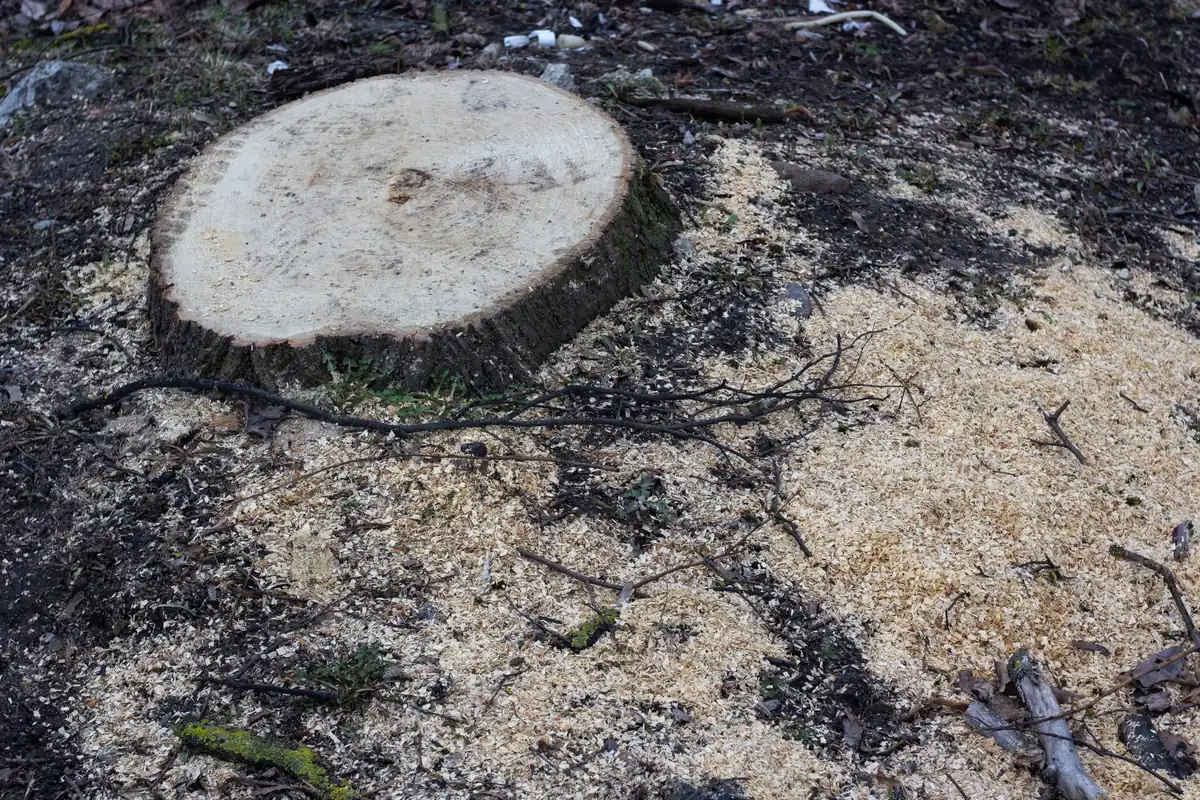
Stump Grinding Spokane — depth options, cleanup options, access considerations. Fill the form and we pass your request to a local Spokane-area tree pro.
Takes 20 seconds. We pass your request to a local Spokane-area tree pro.
Stump Grinding Spokane — this page covers how stump grinding works on Spokane-area jobs, the depth and cleanup options, and what drives the quote. For an estimate, fill the form below — we pass your request to a local Spokane-area tree pro.
Three scope options, three different line items:
Below grade (6–10 inches down). Standard for lots where you want to replant, re-sod, or lay a patio over the former stump location. The grinder goes deep enough that the chip layer sits below your intended surface.
Ground-level cut. The stump is cut flush with the surrounding grade but not ground deeper. Cheaper, faster. Appropriate when you don't need to plant on top and just want the trip hazard gone. Root flare may still protrude as the chip layer settles.
Leave as-is. No stump work at all. The tree comes down, the trunk is sectioned and hauled, and the stump stays. Legitimate choice when the stump is in a far corner of the lot or you plan to let it decompose naturally over 5–10 years.
Specify the option on the request form so the pro quotes the right scope.
After grinding, the stump cavity fills with wood chips. Two options:
Chip-fill the hole. The chips go back into the hole as backfill. Over 6–12 months they settle and decompose. If you plan to replant on the spot immediately, chips are not ideal (they tie up soil nitrogen as they decompose); if you can wait a year, chip-fill is fine.
Haul the chips off. The pro removes the chips and backfills with topsoil you supply, or with topsoil the pro brings (ask whether that's in scope). Standard choice for lawn re-sod or immediate replanting.
Either option, mention on the form so it's quoted correctly.
Ponderosa pine. Deep taproot. The visible stump is the easy part; the taproot can go 10+ feet down. Full root removal is rarely needed — grinding the visible stump below grade is almost always sufficient. The deeper roots decompose over 5–15 years and don't surface.
Cottonwood and willow. Shallow aggressive root systems. Suckering from the remaining root crown is common even after below-grade grinding. If you want zero re-growth, the pro may recommend chemical stump treatment on the fresh cut; otherwise plan on occasional sucker removal for 2–3 years.
Spruce and fir. Fibrous root mats near the surface. Easier to grind than conifer taproots. Good candidates for below-grade.
Elm, locust, maple. Dense wood, slower grind than conifer. Plan for a longer time quote.
Rules vary by whether the tree is on your private property or in the public right-of-way. The City of Spokane Urban Forestry program maintains the current permit rules — see City of Spokane — Tree Permits.
Reasonable reasons to grind a stump instead of leaving it:
What the stump location looks like 1 week, 6 months, and 2 years post-grind:
Immediately after: cavity backfilled with wood chips (or empty if you asked for haul-away). Chips sit slightly above grade — they settle over the first few months.
6 months later: Chip layer has compacted. If chips were left in place, nitrogen is being tied up as they decompose — the surface is not ideal for immediate lawn growth. If chips were hauled and topsoil backfilled, you can plant grass or garden plants.
2 years later: Chip material is largely decomposed. The soil in the former stump cavity is slowly returning to typical quality. Lawn planted now will be fine. Trees planted directly in a former stump site may struggle for a season as remaining root fragments decompose.
If you want to plant a replacement tree in exactly the same spot, best practice is: grind as deep as possible, haul the chips, backfill with quality topsoil, wait 6–12 months before planting the replacement.
If you have several stumps from previous tree removals or you're clearing a lot, bulk grinding is cheaper per stump than one-off work:
If you have 5+ stumps, mention the count on the request form so the pro quotes the bulk rate.
Small decorative stumps (under 6 inches diameter) can be removed with a sharp spade and some digging — root ball and all. Beyond that, DIY options get thin:
Chemical stump remover. Potassium nitrate accelerates decomposition. Takes 6–12 months to see meaningful breakdown. Works best on fully dead stumps that have been drying for a year. Not a fast or complete solution.
Burning the stump. Legal in some rural areas, banned or restricted most places. Also slow and incomplete — the above-grade portion burns, the roots don't.
Rental stump grinder. Available at some Spokane rental yards. The small walk-behind units work on stumps up to about 12 inches. Larger stumps need the equipment the pros use. Full day of rental often costs more than hiring the pro for the same stump.
For most Spokane residential stumps — mature trees, deep taproots, tight access — hiring the pro is usually faster than DIY.
Standard below-grade grinding reaches 6-10 inches below the surrounding grade. For most residential uses — re-sodding, light landscaping, replanting a different species — that's enough. Deep grinding (12-18 inches) is a separate scope and takes longer. Three species-specific notes:
Ponderosa and other deep-taproot conifers. The visible stump is a small fraction of the root system. The pros do NOT remove the taproot — just grind the visible stump below grade. The taproot decomposes over 5-15 years at depth, out of sight.
Shallow-rooted deciduous (maple, cottonwood). Lateral surface roots may protrude up to 20 ft from the stump. Standard grinding handles the stump and the immediately surrounding root flare; distant lateral roots are left to decompose or ground on request as a separate scope.
Fruit trees. Apple, cherry, pear stumps are small and quick. Often included in a larger multi-stump quote at low incremental cost.
How deep does stump grinding go?
Standard is 6–10 inches below grade. Deeper on request if you plan to plant a replacement tree in exactly the same spot. Specify on the form.
How much does stump grinding cost in Spokane?
Depends on stump diameter, species (hardwoods take longer than conifer), access, and cleanup. See tree service cost in Spokane. Multiple stumps in one visit lower the per-stump cost.
Can you grind a stump near my sidewalk?
Yes, with care. The pro assesses clearance during the walk-through and grinds in short passes near concrete to avoid scoring.
What happens to the wood chips?
Default is chip-fill into the hole. If you want them hauled off, specify on the form — the pro quotes that scope.
Will the stump re-grow?
For most Spokane species, no. Cottonwood, willow, and some other species can sucker from residual roots. Ask the pro about chemical stump treatment if zero re-growth matters.
Fill the form above. A local Spokane-area tree pro can contact you to schedule the on-site walk-through.
Get My Estimate →